


Epidural Steroid Injections: What They're For and What to Expect

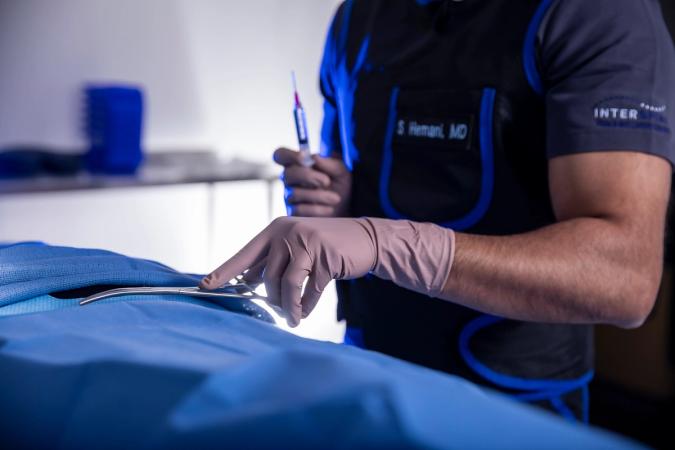
Most of what you’ve read online about epidural steroid injections is either outdated or flat-out wrong. So let me explain it the way I would if you were sitting across from me in my office.
This is a routine procedure. Epidural steroid injections (ESIs) are among the most commonly performed treatments in pain management. The anxiety leading up to the procedure is usually worse than the procedure itself.
Here’s what an ESI actually is, who it helps, what happens during the visit, and what you can realistically expect afterward.
What is an epidural steroid injection?
An epidural steroid injection (ESI) is a minimally invasive procedure that delivers a corticosteroid — an anti-inflammatory medication — directly into the epidural space of the spine, often combined with a local anesthetic. The goal is to reduce inflammation around a compressed or irritated nerve root, which is typically the source of radiating pain, numbness, or tingling in the leg or arm.
It’s worth noting that this is different from the epidural used during labor. Labor epidurals provide continuous anesthesia, while an ESI is a targeted, image-guided injection of anti-inflammatory medication designed to reduce inflammation.
There are three delivery routes, each suited to different clinical situations:
- Transforaminal — delivered through the nerve's exit point in the spine; the most targeted approach for a specific nerve root
- Interlaminar — delivered between the vertebral laminae, covering a broader area of the epidural space
- Caudal — delivered through the sacral hiatus at the base of the spine; useful for lower lumbar and sacral levels
At InterSpine, all ESIs are performed under fluoroscopic (live X-ray) guidance with contrast dye to confirm accurate needle placement. That guidance matters — it's what separates a precise, targeted injection from a blind one.
For more on how ESIs are performed at our practice, see our Epidural Steroid Injections procedure page.
References: Epidural Steroid Injections · ASIPP Comprehensive Evidence-Based Guidelines for Epidural Interventions (2021)
Who is a candidate for an ESI?
ESIs are primarily used for radiating pain from the spine, such as pain that extends into the leg or arm, rather than localized back or neck pain. Conditions commonly treated include:
- Lumbar radiculopathy (sciatica) — shooting pain, numbness, or weakness down the leg, caused by a compressed nerve root in the lower back
- Cervical radiculopathy — similar radiating symptoms down the arm, originating in the neck
- Herniated disc — when disc material presses on a nerve root
- Spinal stenosis — narrowing of the spinal canal that compresses nerve roots, often causing leg pain and cramping with walking
However, ESIs aren’t right for everyone. They may not be recommended if you have:
- Active infection
- Certain bleeding disorders
- Poorly controlled diabetes
- Purely localized (non-radiating) back pain
A common question is whether ESIs can help avoid surgery. For many patients, the answer is yes. While they don’t fix structural problems, they can reduce inflammation enough to allow healing and make physical therapy more effective.
References: ASIPP Comprehensive Epidural Guidelines (2021) · Frontiers in Neurology: Systematic Review and Meta-Analysis of ESI for Sciatica (2024)
What to expect: your visit from start to finish
Before the procedure
- Medications: Let us know about all current medications, especially blood thinners (warfarin, aspirin, clopidogrel, newer anticoagulants). You may need to hold off on some of these for a few days beforehand.
- Eating and drinking: For most patients, a light meal is fine the morning of the procedure. If IV sedation is planned, you'll receive specific fasting instructions.
- What to wear: Loose, comfortable clothing that's easy to move in. No tight waistbands.
- Bring a driver: You should not drive yourself home after the procedure. The local anesthetic component can cause temporary leg weakness, and patients that receive IV sedation may feel drowsy.
- New patients: Download and complete your new patient paperwork before your visit to streamline check-in.
During the procedure
The entire visit usually lasts 30–45 minutes, but the injection itself only takes a few minutes.
Here’s what actually happens:
- You’ll lie on a table positioned for access to your spine
- We prep your back and numb the skin with a local anesthetic. That part feels like a small pinch and may burn briefly. That's the worst of it for most people.
- Under live X-ray guidance, I advance a thin needle toward the epidural space, targeting it right near the specific nerve that's causing your pain. You'll feel pressure, not sharp pain.
- A small amount of contrast dye confirms the needle is exactly where it needs to be — visible in real time on the X-ray screen.
- The steroid and anesthetic solution is deposited at the nerve root. Most patients feel mild pressure or warmth.
- Needle out, small bandage on, and you move to a brief recovery period before heading home.
After the procedure
The first 24 hours: Rest is reasonable, but you don't need to stay in bed. Most patients go home, take it easy, and avoid strenuous activity for the rest of the day.
Best position to sleep: Depends on what is most comfortable for you. On your side with a pillow between your knees or on your back with a pillow under your knees. If you are a stomach sleeper, that position is also fine.
How long to rest: Most patients can return to light daily activities within 24 hours. I typically ask patients to avoid strenuous exercise, heavy lifting, or swimming for 24 hours.
When to call us: Contact the office if you experience fever, increased redness or swelling at the injection site, significant increase in pain after 48 hours, or any new neurological symptoms like sudden weakness or loss of bladder/bowel control.
When to expect relief
You may feel immediate relief from the anesthetic—but it’s temporary and may wear off within hours. The steroid itself can take up to two weeks to fully work.
So don’t panic if you’re not better right away. Give it 10–14 days before judging the results.
Outcomes vary depending on:
- Your diagnosis
- Duration of symptoms
- Degree of nerve compression
For conditions like disc herniation with radiculopathy, results are often very good—but no treatment works for everyone.
References: Annals of Internal Medicine: Epidural Corticosteroids for Radiculopathy and Spinal Stenosis — 30 RCTs (2015)
Risks and Side Effects
It’s important to understand both common and rare risks.
Common, Temporary Effects:
- Increased pain for 1–2 days
- Facial flushing
- Temporary rise in blood sugar (especially for diabetics)
- Mild headache
- Insomnia
- Temporary rise in blood pressure
Rare but Serious Risks:
- Infection
- Bleeding
- Nerve injury
- Allergic reaction
These are uncommon, especially when the procedure is done with imaging and proper technique.
How many can you have per year?
I typically limit ESIs to three or four injections per year at the same spinal level. Cumulative steroid exposure can affect bone density and adrenal function with repeated use. If you need more than three or four in a year, that's a signal we should be reconsidering the overall treatment plan — either escalating to a different intervention or investigating other pain generators.
References: Frontiers in Neurology (2024) — adverse effects data · Epidural Steroid Injection-Related Events (2018)
Is an ESI right for you?
Epidural steroid injections are one of the most well-studied, most commonly performed procedures in interventional pain management — and for good reason. When used appropriately, for the right patient, at the right spinal level, they can provide meaningful relief and restore quality of life without surgery.
But here's the part I want every patient to internalize before they walk into the procedure room: the injection isn't a cure. It's a tool. The goal is to get you enough pain relief that you can get back to being functional and active — so that physical therapy works, so that you can sleep, so that you can move through your day without the pain running everything.
If you've got a procedure coming up and you're feeling anxious, bookmark this and read it again the night before. That's exactly what it's here for.
If you're still trying to figure out whether an ESI makes sense for your situation, I'd love to talk it through. Schedule a consultation at our Johns Creek or Braselton office, or call us at (404) 593-0090.
Also worth reading: Do Epidural Steroid Injections Really Work? Here's What the Research Shows
Dr. Sal Hemani is a double board-certified Anesthesiologist and Interventional Pain Specialist at InterSpine, with offices in Johns Creek and Braselton, Georgia.